LinkedIn marketing for IFS partners
We plan, write, design and publish LinkedIn content for IFS partners. We turn your implementation, upgrade and support expertise into clear posts for the buyers you want to reach, across the UK and US.
“I just wanted to share that I’ve been really impressed with the work Alex is producing for several of our UK partners. The approach around multi-touch, multi-channel campaigns and the focus on more targeted, high-quality content is clearly delivering strong results.”

Results from our last three ERP success stories
Organic LinkedIn activity only, measured in LinkedIn Page Analytics.
Built for firms that sell IFS work
We work with the firms around IFS: the partners who implement and support it, the specialists who staff and run it, and the firms that resell or build on it.
IT directors; Operations leaders; Aerospace and defence; Manufacturing; Construction and engineering; Energy and utilities
Implementation and support partners
New implementations, IFS Cloud upgrades, support and continuous improvement.
IFS staffing and consultancy firms
Placing IFS-skilled consultants on delivery and transformation projects.
Specialist service providers
Managed services around IFS, such as database administration.
Resell and ISV partners
Firms that resell IFS or build products that extend it.
Why LinkedIn stalls for IFS partners
Three problems we keep finding, each one from a real client engagement.
Posting happens when someone has time
No cadence, no content plan and no quality control.
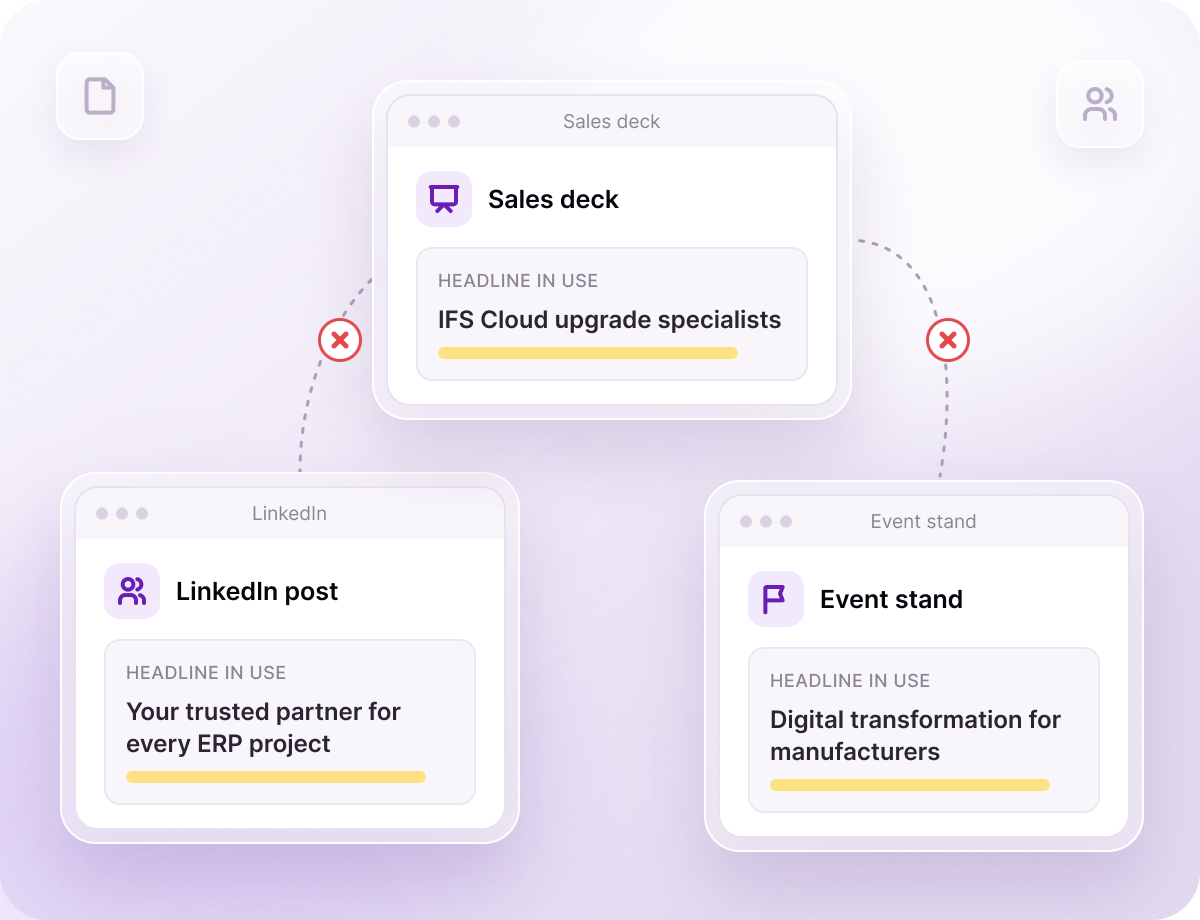
Every channel tells a different story
LinkedIn, sales collateral and event materials say slightly different things, so your delivery strength never comes through.
Technical buyers tune out marketing
IT directors and senior decision-makers are wary of anything that reads like a sales pitch.
Everything it takes to run LinkedIn for an IFS practice
One team plans, writes, designs, publishes and reports, so your consultants stay on delivery.
Content planning around your IFS services
Content pillars built on what you sell: implementation, upgrades, support and continuous improvement.
Writing from consultant interviews
We interview your consultants and write the posts. Nobody on your team has to draft anything.
Design: carousels and visuals
Carousels and graphics designed to a professional standard, with optional video where it adds value.
Publishing and reporting
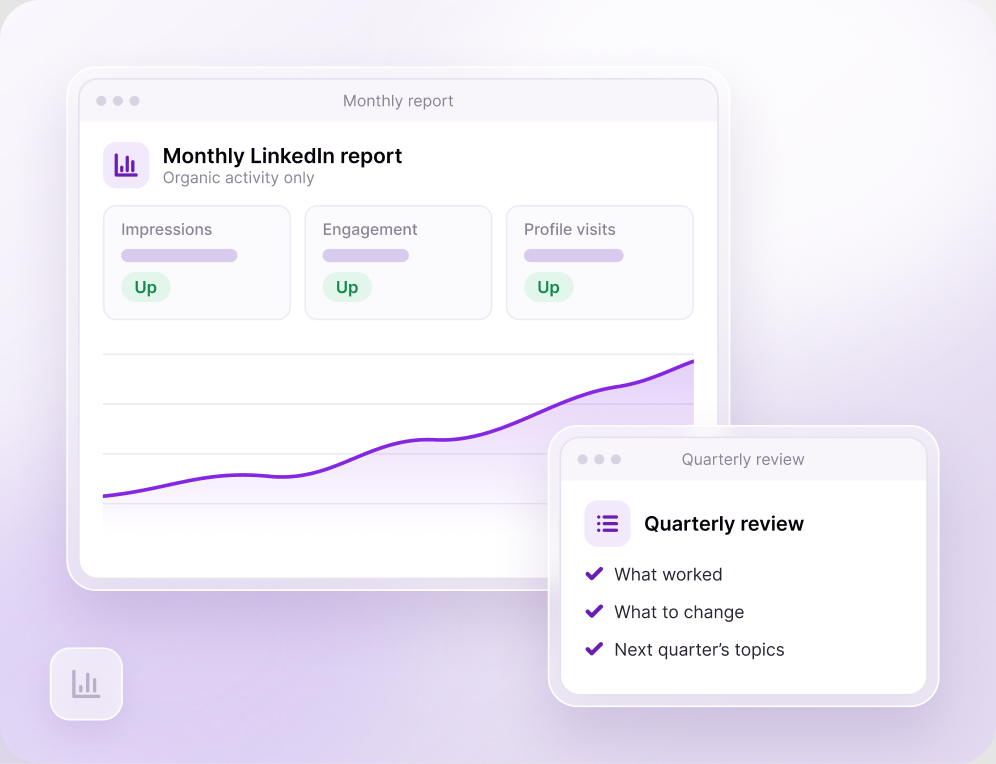
Scheduling, a monthly report and a quarterly review of what to change.
Recent work for ERP consultancies
Each sample shows who it was for and what it was for.

Case study carousel

Thought leadership post

LinkedIn article banner

Consultant profile
Our latest win for an ERP consultancy
Structured marketing programme for a specialist IFS implementation partner
Strong delivery and IFS expertise weren’t reflected in the firm’s marketing. LinkedIn, sales collateral and event materials told slightly different stories, and there was no publishing schedule, approval process or reporting.
Posts an IFS practice could run next quarter
Proposed topics only. We keep the ones that match the IFS work you deliver, whether that is ERP, asset management or field service, and drop the rest.
Preparing for your IFS Cloud upgrade
What your consultants check before an upgrade starts, from customisations to test plans, given twice-yearly releases and monthly service updates.
When maintenance planning lives in IFS
A consultant explains how an asset-intensive client links maintenance work to finance in IFS Enterprise Asset Management, written for operations leaders.
Field service scheduling, explained by your engineers
How your team configures IFS Field Service Management for technicians on the road, and what changes for the dispatcher on day one.
What the latest IFS event means for customers
After IFS Unleashed or a regional IFS Connect event, a consultant picks out the announcements that change your customers’ plans.
Your first 90 days
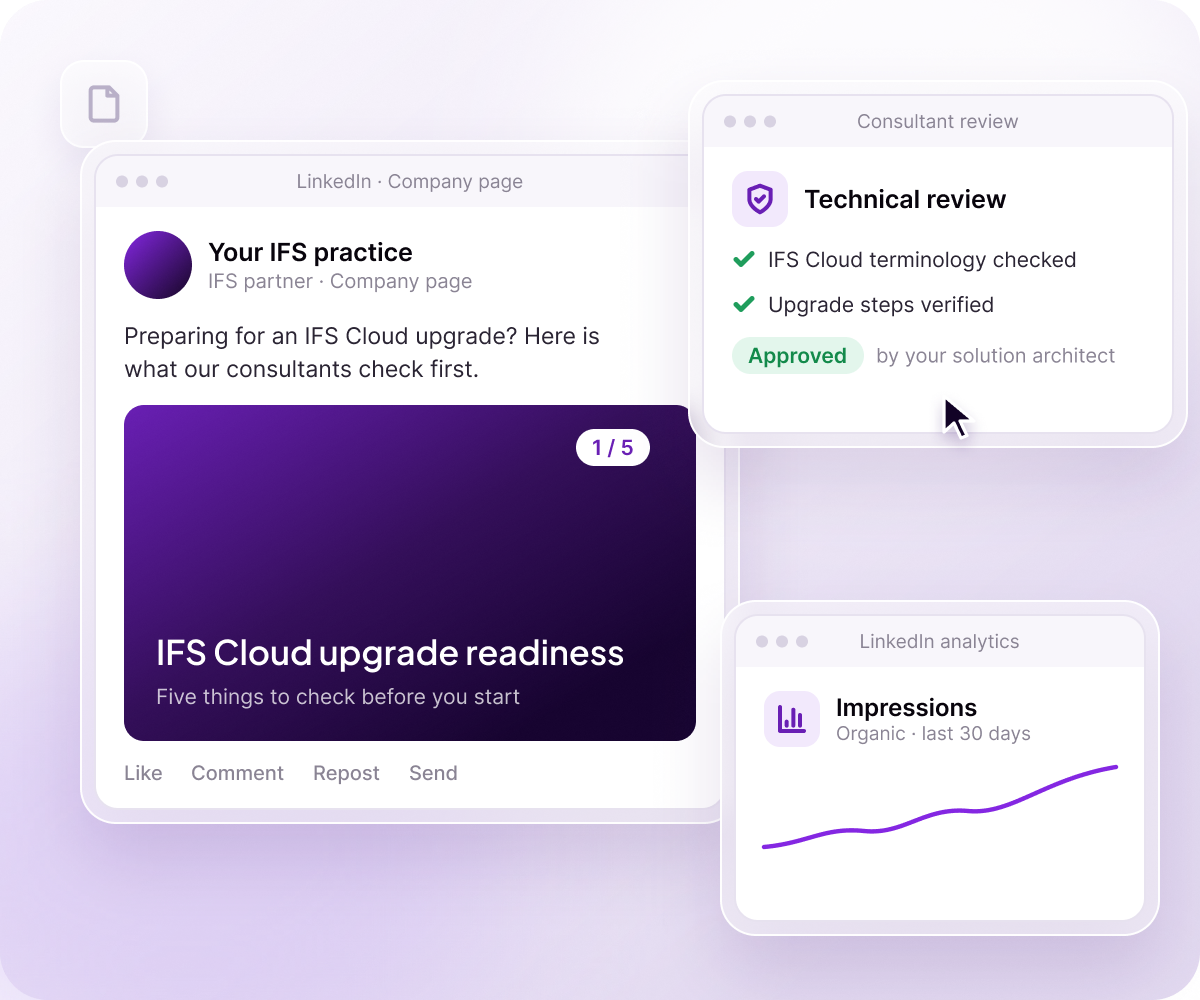
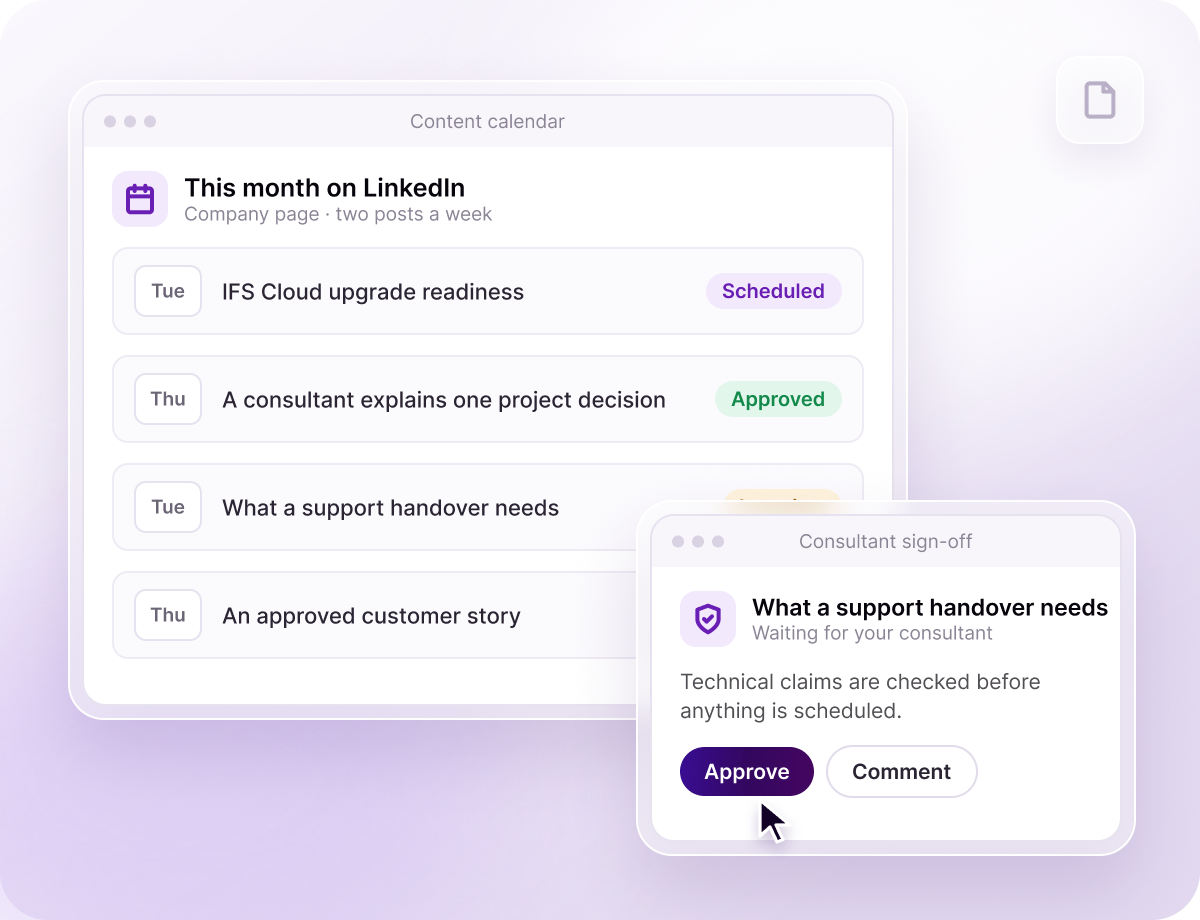
Your consultant signs off every technical claim before anything goes live.
Kickoff and consultant interviews
We learn your services, your buyers and the projects worth talking about.
Content pillars and the first month’s calendar
You approve the plan before anything is written.
Writing and technical sign-off
Your nominated consultant checks the technical claims in every post.
Publishing at the agreed cadence
Set by your scope. One ERP consultancy we work with posts twice a week.
Monthly report and quarterly review
What moved, what to change and next quarter’s topics.
Ascension vs the alternatives
Pick the option you’re weighing up and see the difference side by side.
What our ERP clients say

"Alex has been instrumental in supporting our social media campaigns and marketing materials. He is great to work with and is always looking for new ways to develop content and ideas, with a clear drive to make sure our marketing and brand stand out."
“Substantial traffic increase across all media platforms and increased leads.”
“Pleasure to work with. Responds promptly, and always happy to listen to the team for our feedback to get the required finished article.”
“Agile and smart thinking to quickly achieve outstanding outcomes and tangible results.”
Three ways to run LinkedIn with us
A monthly retainer, scoped to the services you need. Commitment is agreed at scoping.
Strategy & Direction
A LinkedIn plan and templates. Your team does the posting.
Done With You
We create the content with your team’s input.
Questions IFS partners ask us
Answered honestly, before your first call.
A nominated consultant on your team checks the technical claims in every post before it is scheduled. Nothing about IFS goes live without that sign-off.
Yes, and they need different posts. Existing customers already know IFS; what they want is a clear picture of moving to a newer IFS Cloud release: what happens to their customisations, how much testing falls on key users and how the twice-yearly release rhythm affects their planning. Prospects are asking whether you can deliver a first implementation in their industry without disrupting operations. We split the content pillars so each audience gets posts written for it, often voiced by different people: an upgrade lead for the installed base, a solution architect or industry specialist for new business. At each quarterly review we look at what worked for each audience and shift the balance for the next three months, rather than reacting to one post’s numbers. Approved stories from the installed base can serve both audiences: a prospect reading how an existing client handled its move to the latest release learns as much about your delivery discipline as from any pitch. Monthly service updates are worth watching too, because small changes often prompt the most useful short posts. The installed base also responds to plain advice on keeping customisations under control between releases, which positions your team as the safer pair of hands. Customer advisory boards and user communities around IFS also give your consultants a stage worth echoing on LinkedIn.
It should, because those are separate buying decisions. IFS Cloud covers enterprise resource planning, enterprise asset management and field service management, and each is championed by different people. A maintenance manager in a utility or an aviation repair shop reads for asset uptime, work order planning and compliance. A service director cares about first-time fix, scheduling and how engineers work on the road. A finance director weighing an ERP change wants control and reporting. We build separate pillars for the parts of IFS you actually deliver, interview the consultants who run that work and keep the language true to each discipline. If ERP is all you deliver, we leave EAM and FSM alone rather than imply capability you do not have. Sector matters as well. Aerospace and defence, energy and utilities, construction and engineering each bring their own regulations, asset types and acronyms, so a field service post for a utility should not read like one for an equipment manufacturer. IFS Loops Digital Workers, IFS’s industrial AI agents, may deserve posts too once your consultants have hands-on experience to share. Asset-intensive buyers follow industry bodies and standards closely, so referencing the frameworks your consultants actually work with adds authority. Nuclear, rail and defence operators often work under strict security rules, so asset management posts stay deliberately general where needed.
Yes. Events give you a reason to post before, during and after. Ahead of IFS Unleashed or a regional IFS Connect date, posts can say who from your team is attending, which themes you want to discuss and how to book time with you. During the event, short updates from your people on the stand feel more human than polished campaign graphics. Afterwards, a consultant’s view of what the announcements mean for customers’ roadmaps keeps the conversation going once everyone is home. Event and campaign readiness was part of the programme in our IFS implementation partner case, so we put event moments into the calendar weeks ahead rather than the night before. Stand graphics and printed material sit with our campaigns, events and launches service. The IFS Connect series runs across regional locations in the spring, so posts can target the region you are attending, with a nearby customer story where one has been approved. That keeps event content useful to people who never reach the stand. If you exhibit, brief us on stand themes early, so LinkedIn, the stand and the sales deck finally say the same thing. Video clips filmed on the stand, captioned for silent viewing, travel further than photographs alone.
Less than writing it themselves. We interview your consultants about the projects worth talking about, in line with the topics agreed in the plan, and write every post, carousel and caption ourselves. Nobody on your team drafts anything or wrestles with design software. What we do need is accuracy, so your nominated consultant reads each draft and confirms the IFS terminology, release references and process steps before we schedule it. For an upgrade post that might mean checking how you describe testing or customisation reviews; for field service, the scheduling detail. When consultants are deep in a go-live, we move interviews around it and keep a buffer of approved posts so the calendar keeps moving. Most of the effort sits with us: turning one conversation into several posts, a carousel and a quote card, then spacing them across the month. Your team sees each draft, comments where needed and approves it, without anyone being chased for copy. Senior consultants who prefer to stay off camera can still be quoted, with their agreement, or act as the technical voice behind a company page post. Monthly reporting shows which consultants’ posts resonate, which helps you decide whose voice to feature next quarter. Interview recordings, with permission, can also be cut into short audio or video clips that bring your consultants’ voices into the feed.
Different from an implementer’s, because you sell people as well as outcomes. Your readers are the IFS customers and partners who hire consultants, and the IFS specialists you want to recruit. Posts can show the skills your bench covers, from IFS Cloud upgrades to field service rollouts, the kinds of projects your consultants join and what makes a placement work for the client. Consultant spotlights, written from short interviews and approved by the person featured, tend to work well. End clients are named only with their agreement, and a nominated person on your side checks every skills or project claim before it is scheduled. It is also the IFS partner type closest to our own work, which includes a brand refresh and quarterly reporting for an IFS staffing and consultancy firm.
More for IFS partners

How to market ERP software without sounding like every other consultancy
Why your ERP consultancy isn’t getting inbound enquiries
LinkedIn content strategy for ERP consultancies with long sales cycles
Talk to our team about LinkedIn for your IFS practice
The first call covers your IFS services, the accounts you want to grow and what you post now.