LinkedIn marketing for Oracle partners
Oracle Cloud ERP updates every quarter, while customers still running E-Business Suite 12.2 must judge when a move makes sense. We help your practice argue its view on LinkedIn, in posts written and designed for British and American buyers.

“I just wanted to share that I’ve been really impressed with the work Alex is producing for several of our UK partners. The approach around multi-touch, multi-channel campaigns and the focus on more targeted, high-quality content is clearly delivering strong results.”

Results from our last three ERP success stories
Organic LinkedIn activity only, measured in LinkedIn Page Analytics.
For firms on every side of Oracle ERP
Oracle PartnerNetwork separates firms that build, service and sell in the cloud from those focused on licences and hardware. We write for the Oracle ERP side of that world: Fusion, E-Business Suite and JD Edwards.
CFOs and finance transformation leads; Oracle applications managers; CIOs; Mixed-mode manufacturers; Distribution; Asset-intensive operations
Cloud service partners
Oracle Cloud ERP implementations, including phased moves off E-Business Suite.
EBS and JD Edwards specialists
Upgrades, support and improvement for customers staying on premises for now.
Cloud sell and licence partners
Reselling Oracle cloud subscriptions, on-premises licences and hardware.
Cloud build partners
Products built on Oracle Cloud, from integrations to industry extensions.
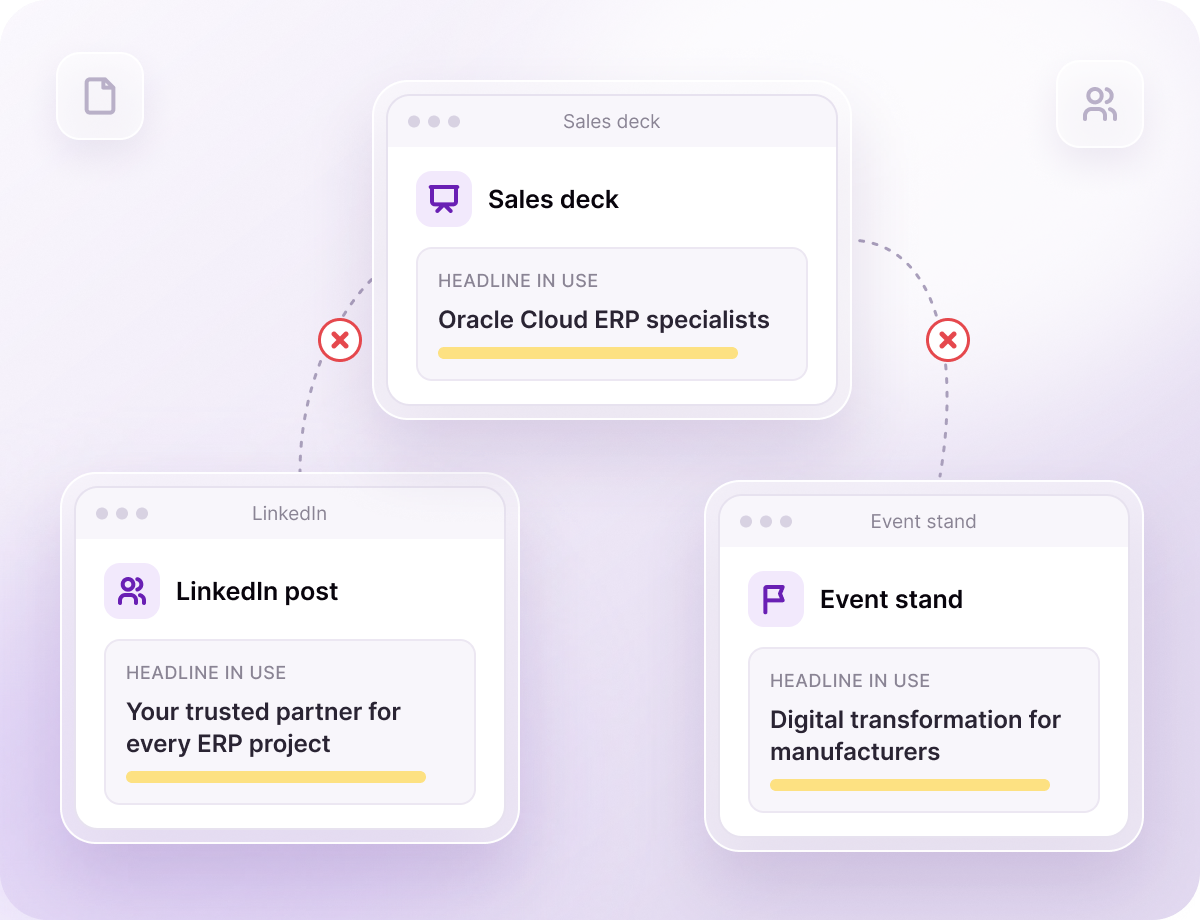
Oracle ERP expertise, lost in the feed
Three problems we keep finding, each one from a real client engagement.
Posting happens when someone has time
No cadence, no content plan and no quality control.
Every channel tells a different story
LinkedIn, sales collateral and event materials say slightly different things, so your delivery strength never comes through.
Technical buyers tune out marketing
IT directors and senior decision-makers are wary of anything that reads like a sales pitch.
How we run LinkedIn for an Oracle ERP practice
One team plans, writes, designs, publishes and reports, so your consultants stay on delivery.
Separate plans for Fusion, EBS and JD Edwards
Fusion projects, EBS and JD Edwards support, quarterly update readiness and finance transformation stories.
Writing from consultant interviews
We interview your consultants and write the posts. Nobody on your team has to draft anything.
Design: carousels and visuals
Carousels and graphics designed to a professional standard, with optional video where it adds value.
Publishing and reporting
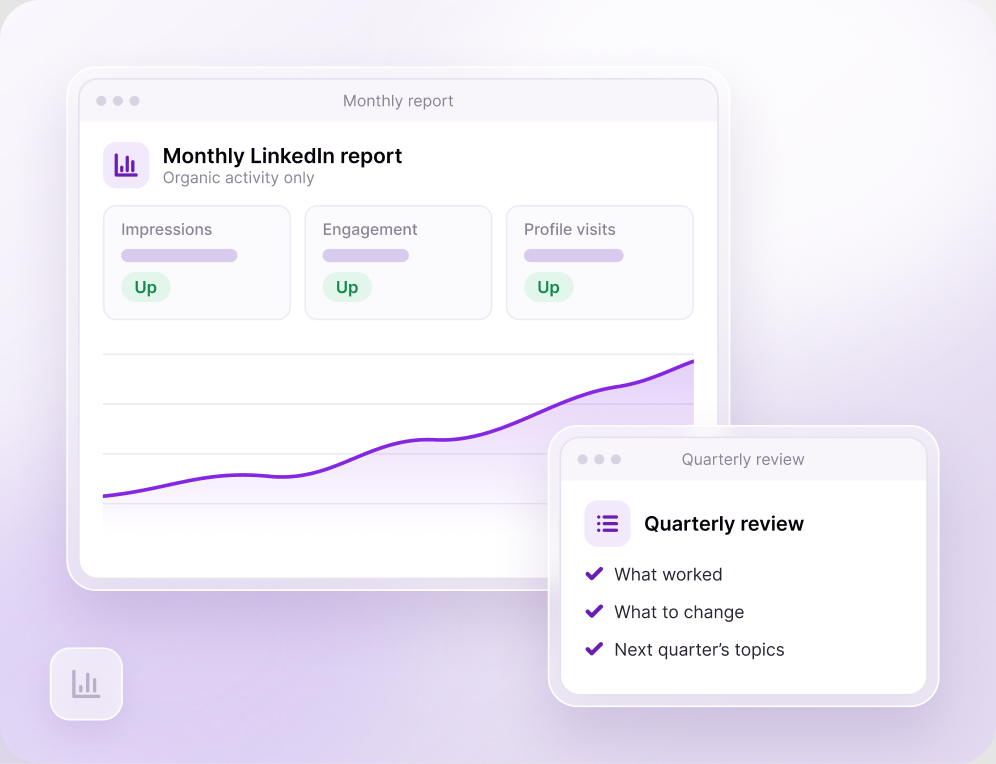
Scheduling, a monthly report and a quarterly review of what to change.
Recent work for ERP consultancies
Each sample shows who it was for and what it was for.

Case study carousel

Thought leadership post

LinkedIn article banner

Consultant profile
Our latest win for an ERP consultancy
Structured marketing programme for a specialist IFS implementation partner
Strong delivery and IFS expertise weren’t reflected in the firm’s marketing. LinkedIn, sales collateral and event materials told slightly different stories, and there was no publishing schedule, approval process or reporting.
Oracle ERP topics worth testing
Suggested, not fixed. A JD Edwards specialist and a Fusion implementer would each rewrite this list around their own customers.
Leaving E-Business Suite for Fusion: when and how
Oracle publishes a support policy for EBS 12.2, so timing is a planning choice. Your consultants explain what should decide it.
What each quarterly Oracle Cloud ERP update changes
Oracle ships Fusion updates every quarter. A short post on the features finance clients should test, and the ones they can park.
Staying current on JD Edwards EnterpriseOne 9.2
How your team applies Oracle’s Continuous Innovation releases for JD Edwards customers, and what that means for their planning.
A finance close, before and after Fusion
A customer-approved story on how one finance team’s month end changed after moving to Oracle Cloud ERP, in their own figures.
Your first 90 days
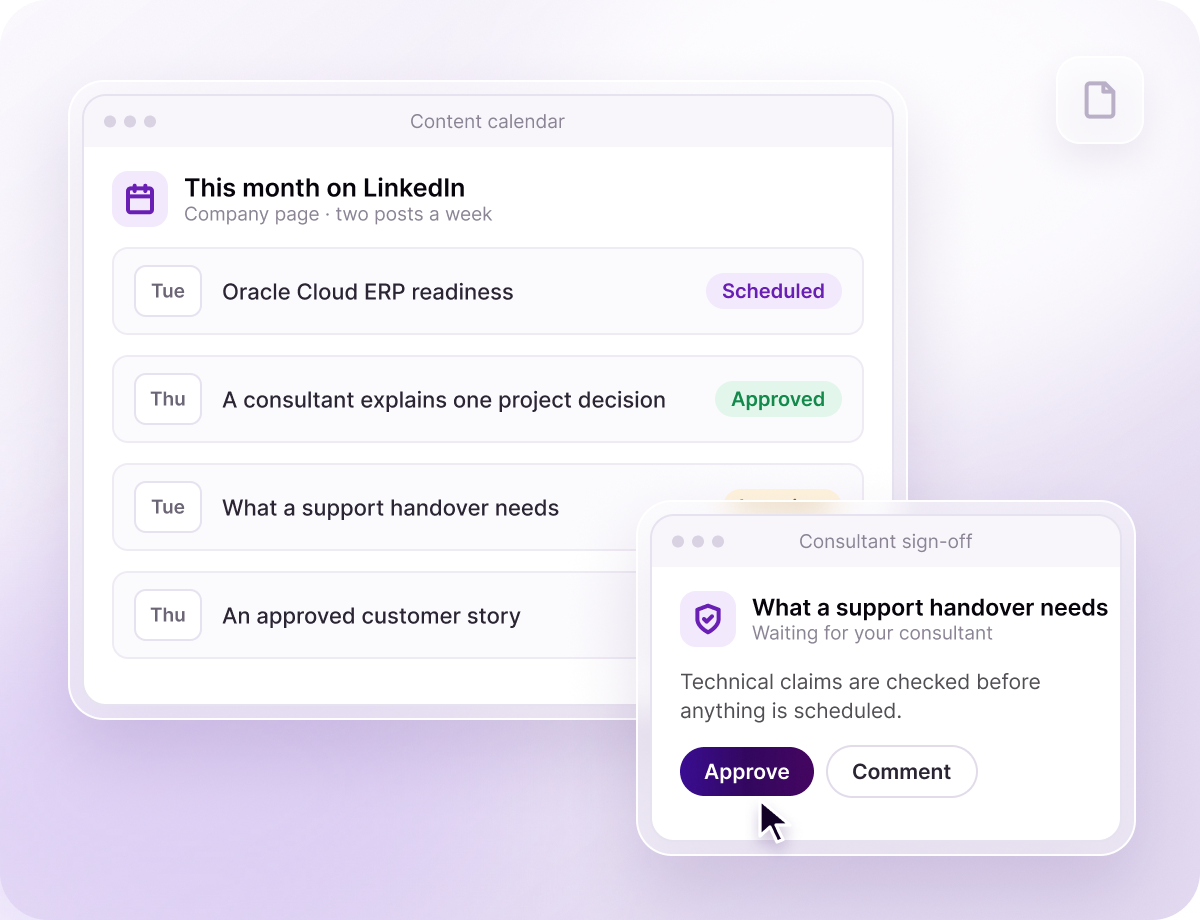
Your consultant signs off every technical claim before anything goes live.
Kickoff and consultant interviews
We learn your services, your buyers and the projects worth talking about.
Content pillars and the first month’s calendar
You approve the plan before anything is written.
Writing and technical sign-off
Your nominated consultant checks the technical claims in every post.
Publishing at the agreed cadence
Set by your scope. One ERP consultancy we work with posts twice a week.
Monthly report and quarterly review
What moved, what to change and next quarter’s topics.
Ascension vs the alternatives
Pick the option you’re weighing up and see the difference side by side.
What our ERP clients say

"Alex has been instrumental in supporting our social media campaigns and marketing materials. He is great to work with and is always looking for new ways to develop content and ideas, with a clear drive to make sure our marketing and brand stand out."
“Substantial traffic increase across all media platforms and increased leads.”
“Pleasure to work with. Responds promptly, and always happy to listen to the team for our feedback to get the required finished article.”
“Agile and smart thinking to quickly achieve outstanding outcomes and tangible results.”
Three ways to run LinkedIn with us
A monthly retainer, scoped to the services you need. Commitment is agreed at scoping.
Strategy & Direction
A LinkedIn plan and templates. Your team does the posting.
Done With You
We create the content with your team’s input.
Oracle ERP questions, answered upfront
Answered honestly, before your first call.
Yes, and it matters, because each has a different buyer and a different clock. Fusion customers live with quarterly updates and want to know what each one changes for their finance team. EBS customers want an honest view on whether staying on 12.2 for longer is sensible under Oracle’s published support policy, or whether waiting simply stores up work. JD Edwards customers want to keep 9.2 current through Continuous Innovation releases without a disruptive project. We give each product its own pillar, interview the consultants who live in that product, and avoid blending them into one generic Oracle message that every Oracle shop could publish. Industry still matters inside each product: JD Edwards stories often come from mixed-mode manufacturing, distribution or asset-intensive operations, while Fusion finance stories can come from almost any sector, so we follow your client base rather than a generic list. EBS customers in particular value content about running both worlds during a phased move, such as keeping reporting consistent while some entities are on Fusion and others are not. Asset-intensive JD Edwards customers care about maintenance and capital planning in ways a distribution business does not. Customers running several Oracle products, perhaps Fusion financials alongside JD Edwards manufacturing, need content that explains how the pieces coexist.
We write from your consultants’ method, not from Oracle marketing. An interview with the lead who ran an assessment gives us the real sequence: data cleansing, integrations, reporting, controls and the people who have to change how they work. Posts can be candid about where projects get hard, which reads as expertise rather than a warning. A nominated consultant signs off every technical claim, including product names, quarterly release references and support dates, before the post is scheduled. If a statement depends on licensing, region or a specific cloud service, the post says so rather than implying it applies to everyone. Posts can also cover what stays the same, such as approval rules or reporting a finance team relies on, because reassurance about continuity persuades as much as a list of new capabilities. Customers leaving heavily customised EBS environments also want to know how extensions are handled in the cloud, so posts explain your team’s approach without jargon. Testing strategy for quarterly updates deserves explanation too, because it is a recurring cost of the cloud that buyers often underestimate. Conversion rehearsals and parallel period-end closes are milestones a migration post can describe without promising dates.
If you hold it, yes, in Oracle’s current wording for your track and product family. Oracle awards Expertise by product family, cloud service or deployment scenario, and partners choose a Build, Service or Sell track in the cloud path, so a vague ‘Oracle partner’ line throws away a real point of difference. We confirm exactly which track and Expertise you have before it appears anywhere, check the wording against Oracle’s own description, and never imply a status you have not earned. Where a credential is renewed or changes, we update the posts that reference it. If your firm holds credentials in several product families, we decide with you which ones support this audience, rather than listing every badge in every post. Oracle also runs Industry Healthcare and License and Hardware tracks, so we make sure posts describe the track that matches your Oracle ERP work rather than a neighbouring one. Partner case studies that Oracle has published about your firm, where they exist, can be referenced and linked, which carries more weight than self-description.
By alternating rather than compromising. Finance leaders want to hear about close times, controls, reporting and what changes for their team; IT leaders want integrations, security, environment strategy and how quarterly updates are tested before they reach users. A post that tries to satisfy both usually reads like a brochure. We tag each post to one reader, interview the consultant closest to that concern and write in that reader’s language. The quarterly review then shows which side needs more airtime, and leadership profiles can carry the finance argument while the company page handles release news. Formats differ too: finance readers respond to a worked example of a faster close or a cleaner audit trail, IT readers to a diagram of the integration pattern or a test plan for the next quarterly update. Audit committees and controllers are another audience worth occasional posts, especially when a migration changes how controls are evidenced. Procurement and HR leaders appear in some Fusion programmes as well, and a post written for them can open doors that finance-led content does not. Payroll, treasury and tax specialists are occasional readers too, and a single well-aimed post for them can be remarkably effective.
No. We interview them about the work, then write, design and publish the posts, carousels included. Their main task is checking: a nominated consultant reviews the technical claims before scheduling. For Oracle content that usually means release names, product names, module scope and support dates, because a post that confuses EBS terms with Fusion terms will be noticed by exactly the people you want to impress. We batch interviews where we can, so one conversation can feed several posts across the month. When Oracle publishes readiness material for a quarterly update, a short interview with the consultant who has read it is often enough for a timely post, written while competitors are still summarising release notes. Consultants can also suggest topics as they work: a short note after a tricky integration or an awkward close can become next week’s best post. Leaders who attend Oracle user groups or partner events can also turn those days into short field reports.
Openly, and on fit rather than criticism. Both products come from Oracle, so knocking one rarely helps and buyers notice when it happens. The useful post sets out the criteria your consultants actually use: the number of legal entities and currencies, how complex the finance and procurement processes are, the integration landscape and the internal team that will run the system. A short carousel can walk a finance leader through those questions, and a leadership post can describe a time your team steered a client towards whichever option suited them, which earns more credibility than any feature table. We avoid unverified claims about either product, and your nominated consultant approves the comparison wording before it is scheduled. If Fusion is the only product you deliver, the posts say so plainly.
Oracle ERP marketing guides

How to market ERP software without sounding like every other consultancy
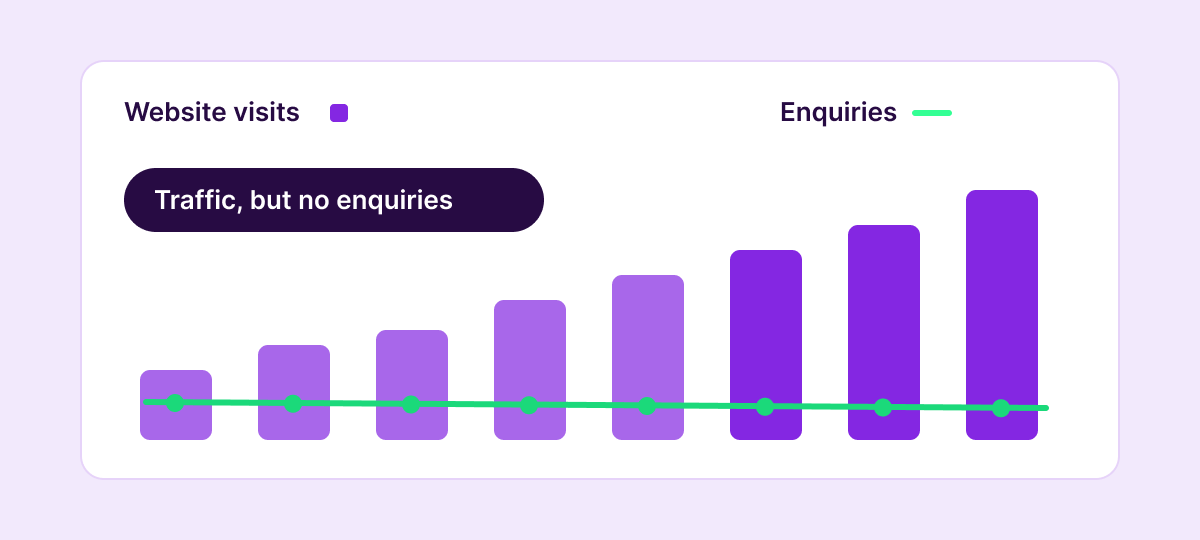
Why your ERP consultancy isn’t getting inbound enquiries
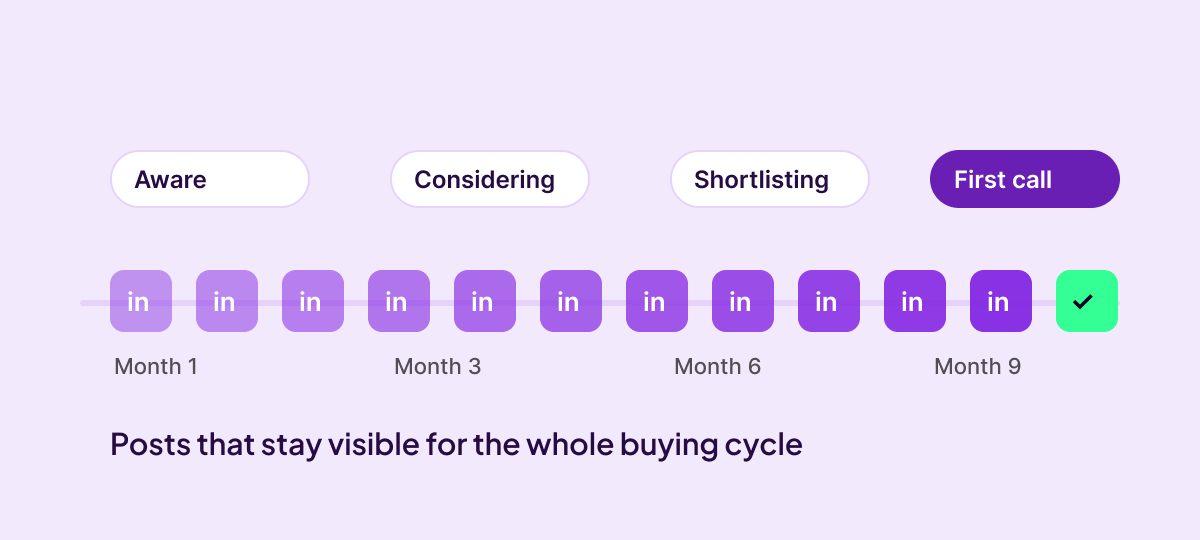
LinkedIn content strategy for ERP consultancies with long sales cycles
Let’s map your Oracle ERP content
Bring your mix of Fusion, EBS and JD Edwards work and the finance or IT leaders you want to reach. We’ll map a quarter.